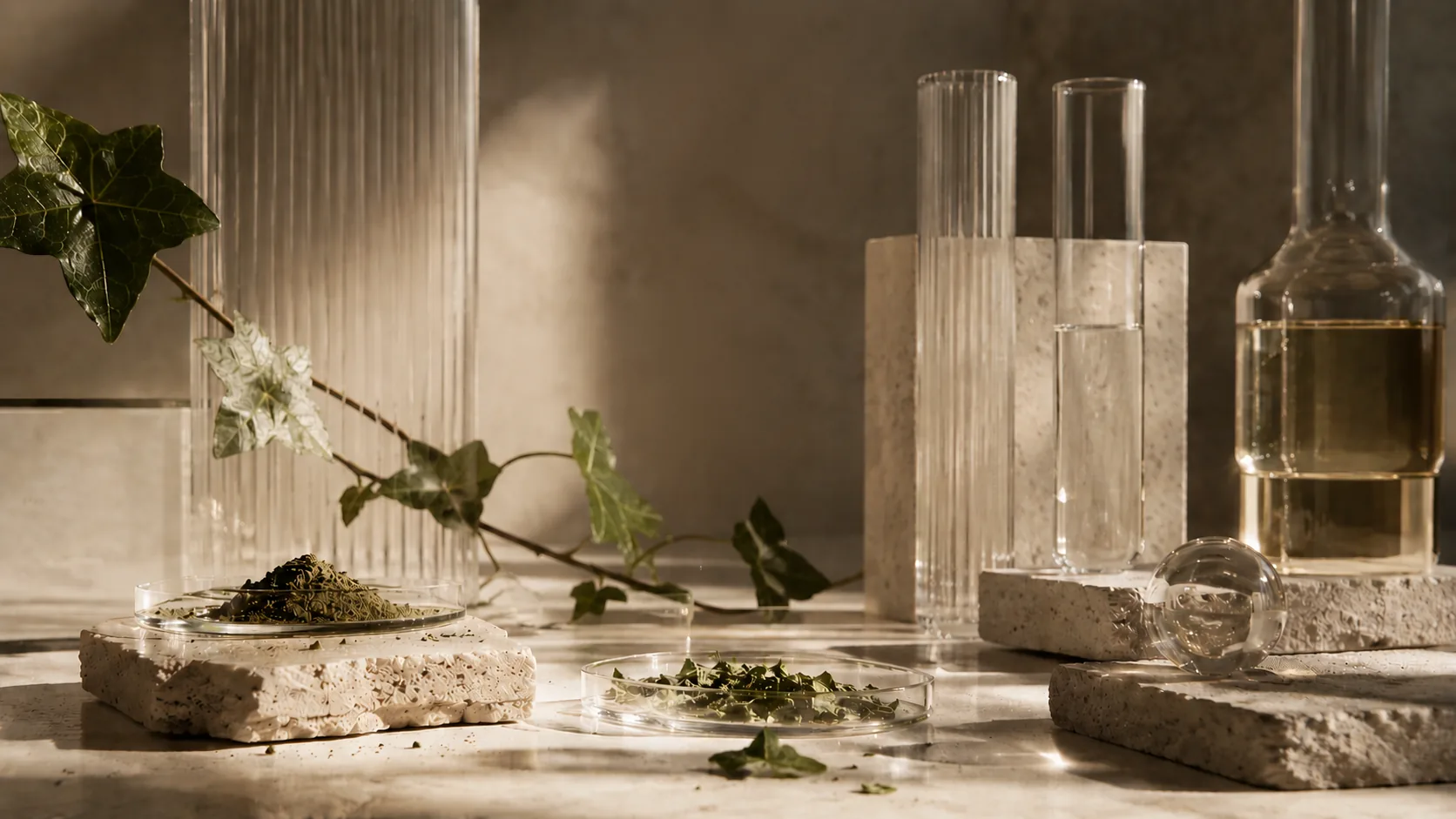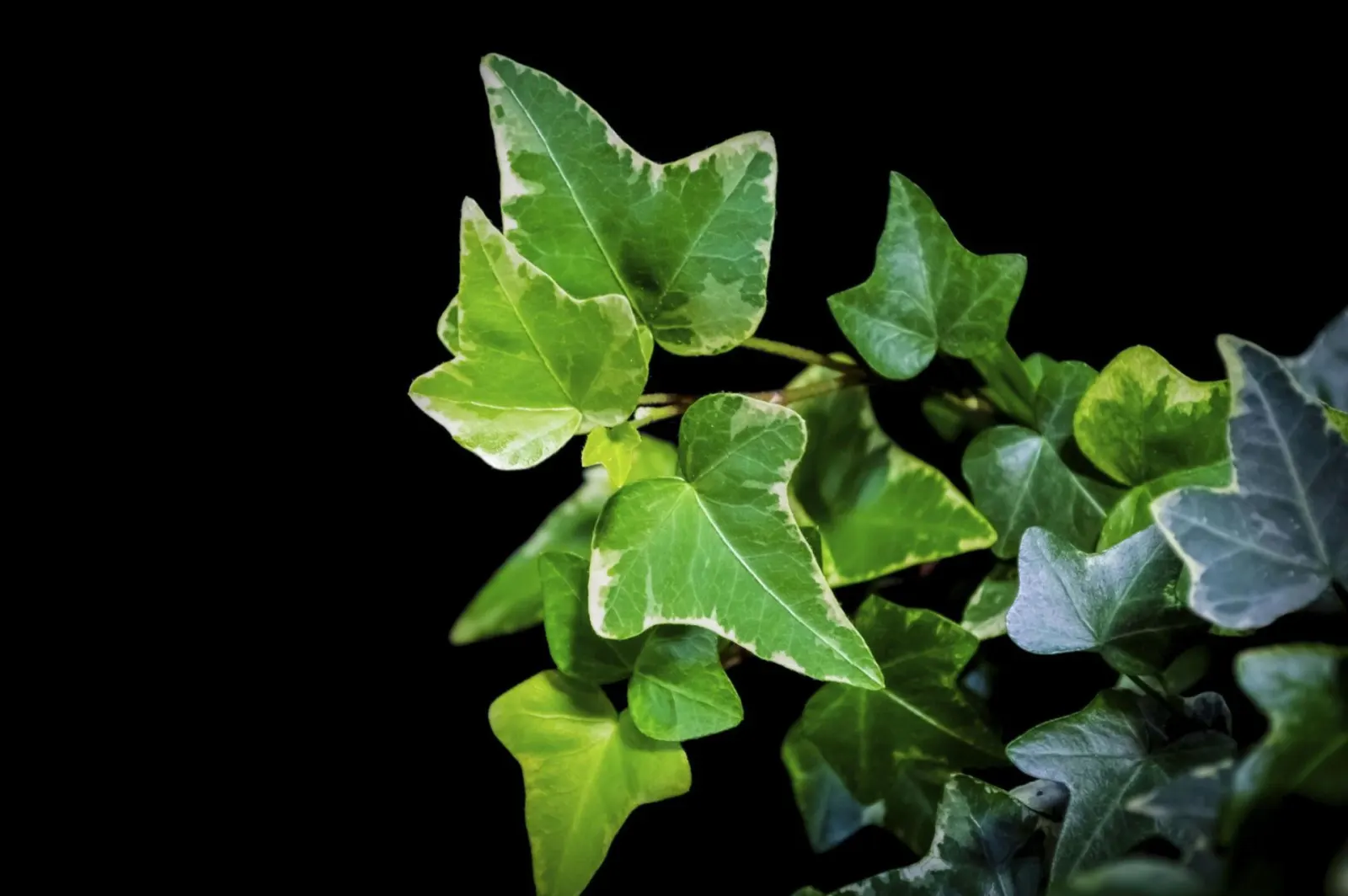
It does not chase the light.
It asks for nothing.
It spreads, slowly.
Silently.
Where other plants impose themselves,
it persists.
Clinging to walls,
to trees,
to structures time has forgotten.
We call it invasive.
We call it useless.
We cut it.
We tear it down.
Without understanding.
For beneath its dark leaves,
ivy holds an ancient intelligence.
The capacity to cleanse,
to protect,
to restore.
Without noise.
Without harsh chemistry.
Without compromise.
A quiet force.
Yet radical.
A force we had forgotten.
And one we are rediscovering today.
Saponins: ivy's secret chemistry
The power of ivy rests on one key element: saponins.
Natural molecules that foam on contact with water.
They act as natural surfactants, lifting grease and impurities from textile fibres.
Unlike the synthetic agents found in industrial detergents, they are biodegradable and gentler on skin.
Effective. Never aggressive.
Another way to clean.
Hedera helix: a plant used since Antiquity
Ivy — Hedera helix — has been used for centuries.
In ancient Rome, it was already part of medicinal preparations.
Medieval herbalists drew on its cleansing and protective properties.
Then the knowledge faded.
Replaced by industrial solutions — faster, but harsher.
Today, ivy returns.
Not as a trend.
As a self-evidence.
Why ivy outperforms conventional detergent
| Criterion | Ivy | Conventional detergent |
|---|---|---|
| Origin | Plant-based | Petrochemical |
| Biodegradability | High | Variable |
| Skin impact | Gentle | Possibly irritating |
| Residues | Minimal | Present |
The difference is not only in efficiency.
It lies in the impact.
Over time.
On the living.
Ivy at DIVYNE: from plant to ritual
At DIVYNE, ivy is not a marketing argument.
It is a foundation.
A self-evidence.
A plant that embodies a quiet force.
Like kintsugi, it does not mask.
It reveals.
It restores.
It accompanies.
Conclusion
Ivy never disappeared.
We simply stopped looking.
Today, it returns.
Not as a trend.
As a self-evidence.
DIVYNE is not yet available — join the first circle