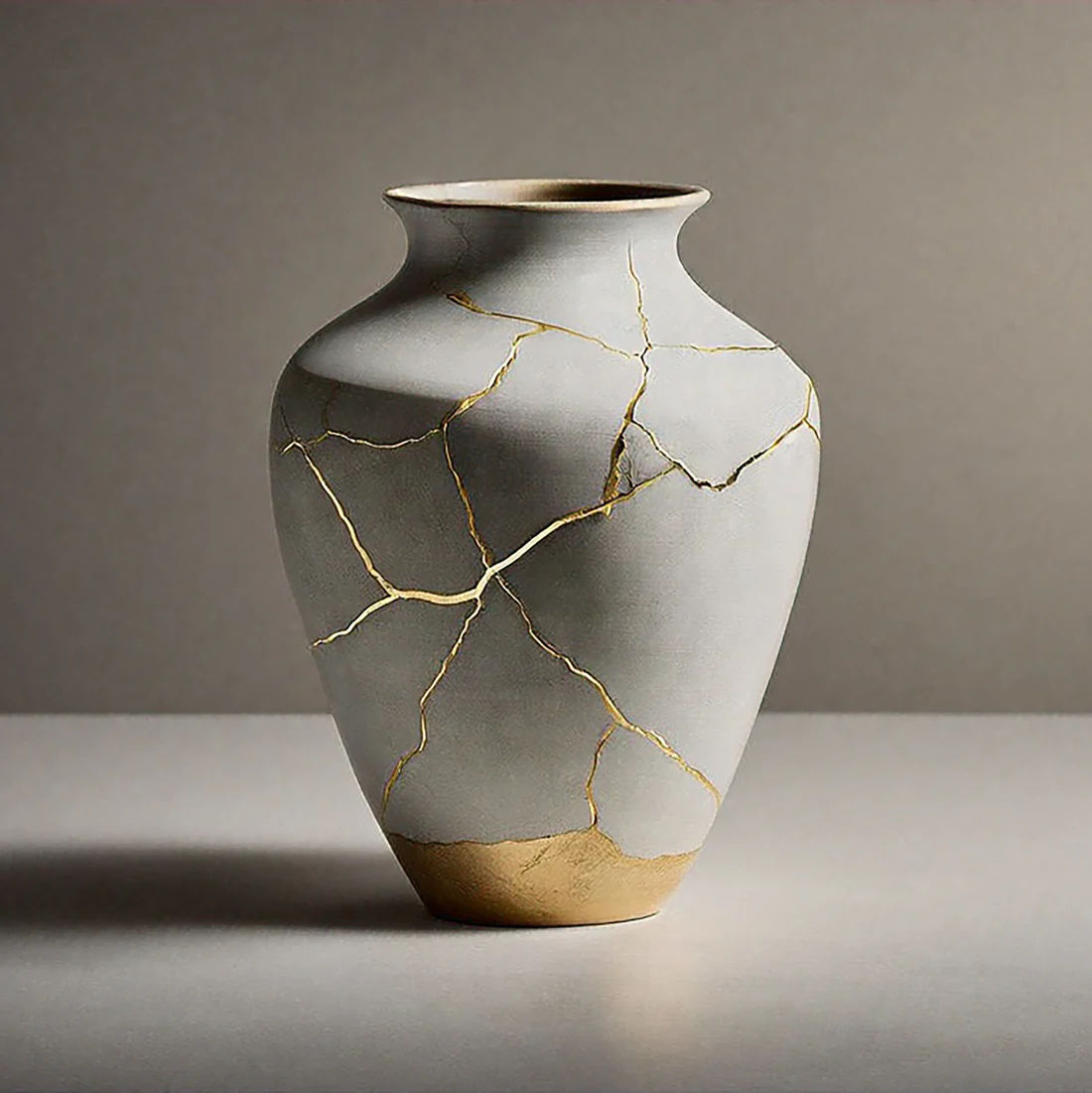
We are taught to hide the cracks. Kintsugi does the opposite. It reveals them.
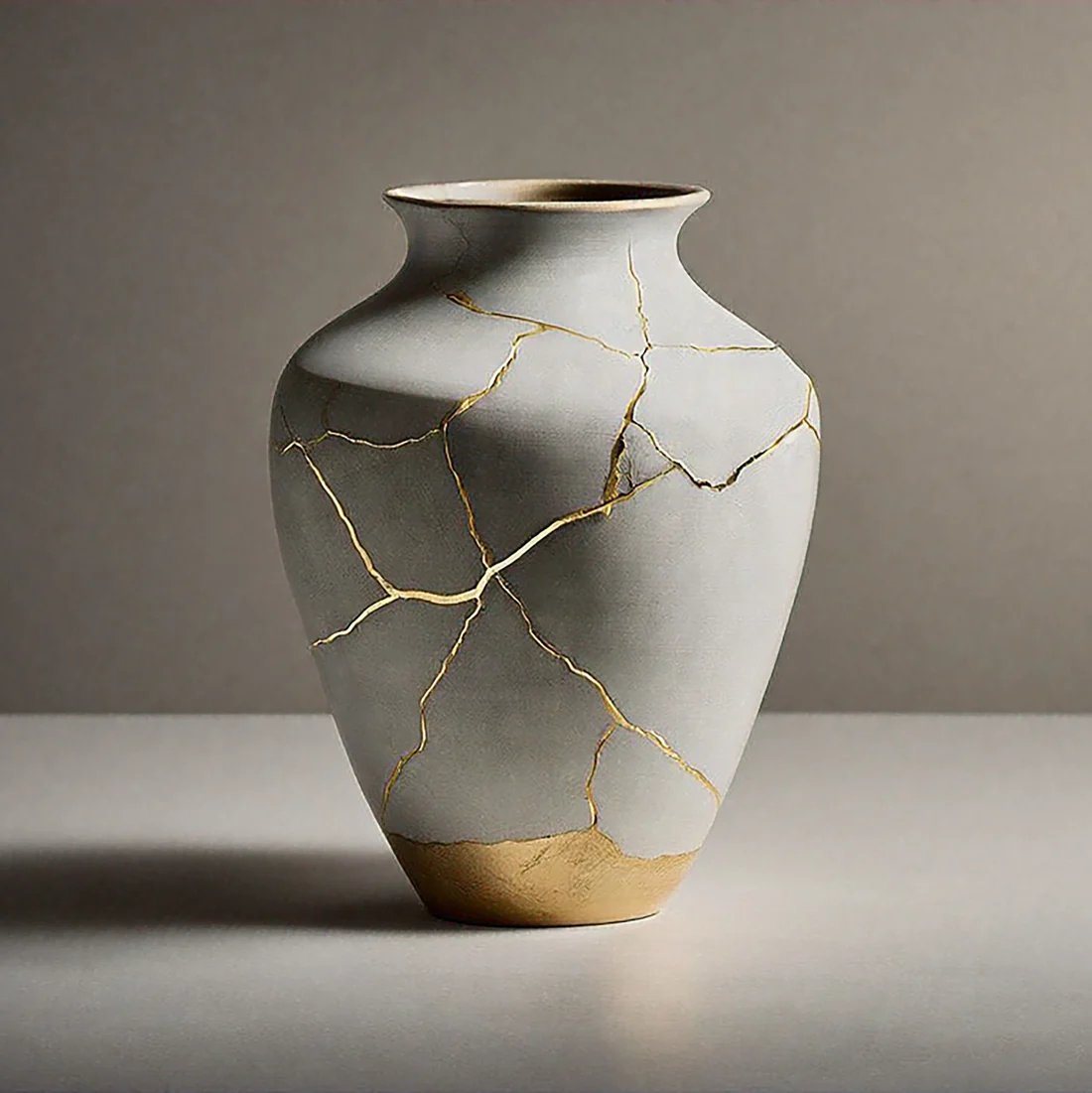
Gold within the break
Born in Japan, this art consists in repairing a broken object with gold. Not to erase the rupture, but to elevate it.
The fracture becomes a signature. Not a flaw, but a story.
A bowl repaired with kintsugi is worth more than the intact one. Because it carries the memory of what it has lived through. Because the gold that runs through it hides nothing — it magnifies.
Another way of seeing
Less perfect. More true.
In a world obsessed with the new, the smooth, the immaculate, kintsugi proposes a radical reversal: beauty does not lie in the absence of a flaw. It lies in the way we move through it.
This philosophy has a name: wabi-sabi. The art of finding beauty in imperfection, serenity in the ephemeral. A principle that runs through all Japanese culture — from the tea ceremony to architecture, from ceramics to textile.
In laundry care, it is the same
We often try to mask. To perfume. To cover.
Conventional detergents work on this principle: covering wear with synthetic fragrance, faking newness with optical brighteners, concealing rather than respecting.
But what is alive does not need to be hidden. It needs to be honoured.
Fabric as a living material
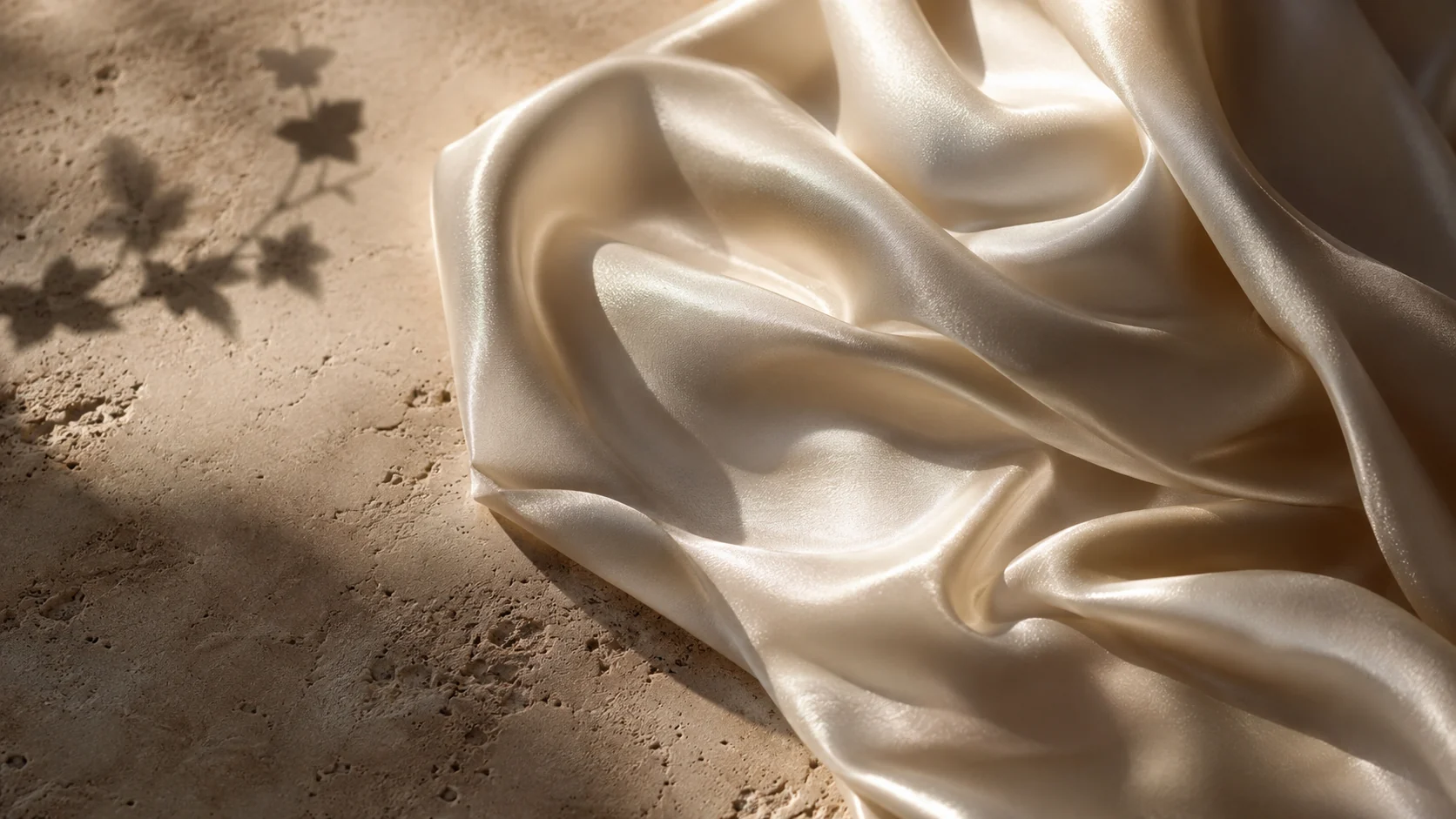
Fabric lives. It absorbs, it breathes, it ages. Linen fibres soften with time. Cotton grows gentler wash after wash. Wool develops a unique texture through the seasons.
This evolution is not a problem to solve — it is a beauty to preserve.
A well-designed natural detergent does not try to turn back time. It accompanies the material in its transformation, cleansing without aggression, purifying without altering. It is kintsugi applied to the everyday.
Less chemistry. More precision.
The parallel between kintsugi and natural cleansing runs deep. In both cases, it is a matter of giving up artifice to recover the essential. Of replacing brute force with the intelligence of a gesture. Of choosing coherence over appearance.
An ivy-based detergent masks nothing. Its plant saponins dissolve impurities with delicacy, then disappear. No chemical residue clinging to the fibres. No artificial fragrance laid over the cloth. Only what is clean, in its purest form.
Three lessons from kintsugi
I. The value of an object lies not in its perfection, but in the attention given to it.
II. A trace is not a flaw to correct; it is a memory to honour.
III. To repair is not to mask. It is to reveal what deserves to last.
Reveal rather than cover
A linen sheet washed a thousand times, its weave softened by the years. A cashmere jumper that has crossed ten winters. A shirt whose collar carries the memory of a thousand days.
These textiles are not worn out — they are inhabited.
Treating them with an alternative to chemical detergent is to give them the tribute they deserve. It is to acknowledge that laundry care is an act of respect, not concealment.
Don't clean. Elevate.
At DIVYNE, we have made kintsugi our philosophy. Our logo bears a golden fracture — not as a mark of fragility, but as a symbol of truth.
Our formulas do not seek to turn your linen into something it is not. They reveal what it truly is: a living material, worthy of care, worthy of attention.
Every wash becomes a gesture of gentle repair. Not in the literal sense of kintsugi — but in its spirit: to honour what exists, to elevate what has lived, to refuse to mask.
Discover DIVYNE — laundry care reinvented at mydivyne.com