Cars have evolved.
Phones have evolved.
Design has evolved.
Skincare has evolved.
Even the way we cook, travel and work has changed.
But laundry?
It seems to have stayed frozen in another era.
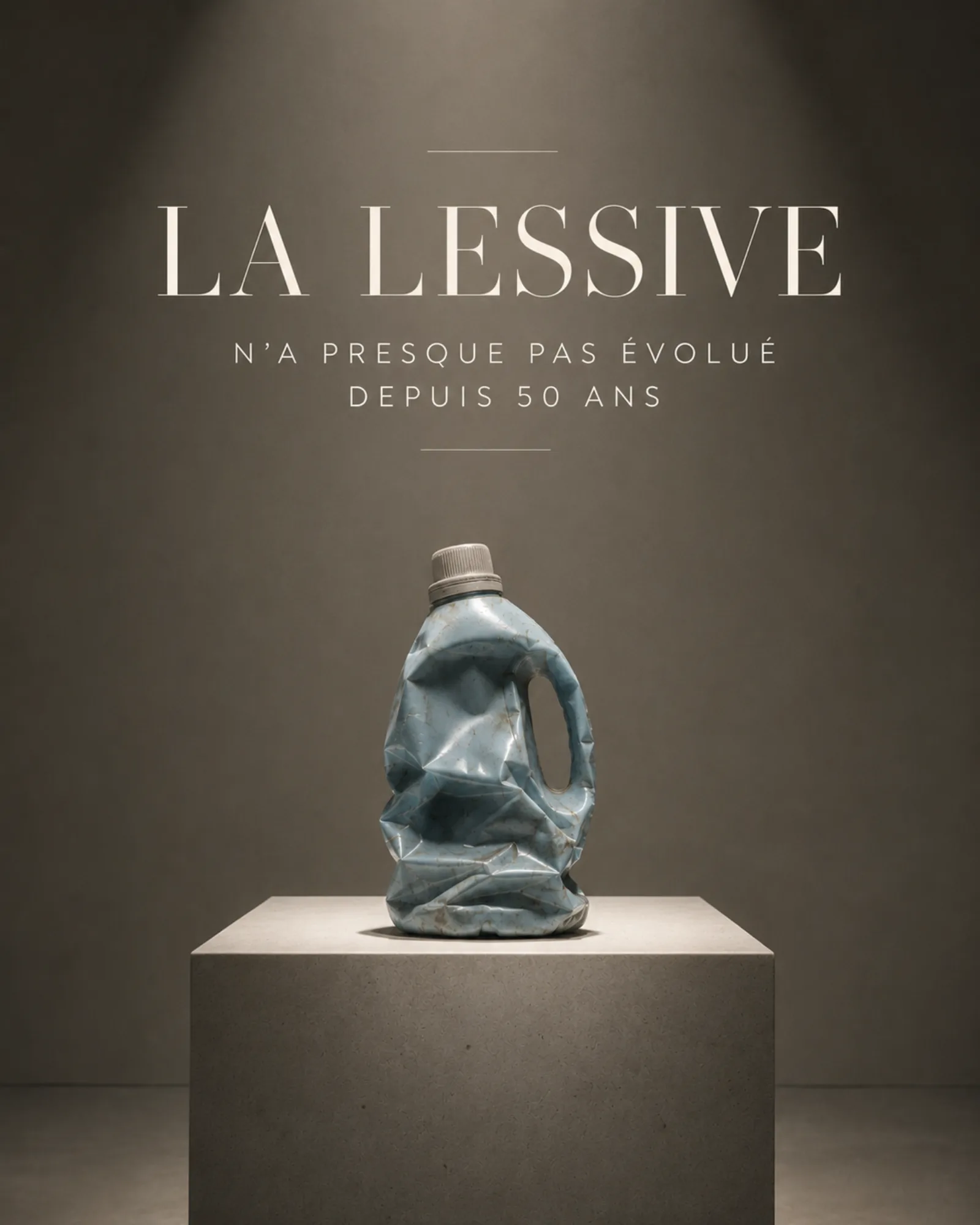
The same plastic bottles.
The same supermarket aisles, saturated with aggressive colours.
The same promises shouted in capitals on overloaded packaging.
Ultra freshness.
Brilliant white.
Long-lasting fragrance.
As if nothing had really changed.
For decades, laundry has been treated as a simple utilitarian product.
A functional object. An invisible one.
Something kept hidden in a cupboard, beneath a sink, or tucked away in a laundry room.
Never as an experience.
Never as a ritual.
Never as true textile care.
And yet, our clothes have never carried more value.
We invest in nobler materials.
In pieces we want to keep for longer.
In interiors that are quieter, more refined, more intentional.
So why keep using products designed with yesterday's codes?
An industry built around volume
Most modern detergents still rely on an old logic: produce more, transport more, consume more.
Larger and larger plastic bottles.
Diluted formulations.
Thousands of miles travelled to transport what is, ultimately, mostly water.
Today, a conventional liquid detergent can still contain between 60% and 90% water according to multiple industry analyses. Hundreds of millions of gallons transported every year inside plastic containers designed to be discarded after only a few uses.
Even when some brands now adopt a more "green" narrative, the structure often remains identical.
The problem is not only environmental.
It is also cultural.
Modern laundry has rarely been thought through with:
- a design logic
- a refined sensorial approach
- a minimalist vision
- a real reflection on the object itself
As if the care of linen did not deserve to evolve.
The silent lag of laundry care
Skincare has become a world of experience.
Coffee has become a ritual.
Even technology is now designed as an emotional extension of everyday life.
But laundry care has stayed locked in codes inherited from the 1990s.
Products that are:
- visually aggressive
- chemically overloaded
- built to occupy space
- designed for the shelf rather than for the home
For a long time, this felt normal.
Today, it is starting to feel dated.
A new generation is emerging.
A generation that prefers owning less, but better.
One that applies the same standards to laundry care as it does to skincare, fashion or interior design: coherence, quality of materials, discretion.
It is a generation that learned to read the labels of its cosmetics.
It was inevitable that one day, it would begin reading those of its detergent.
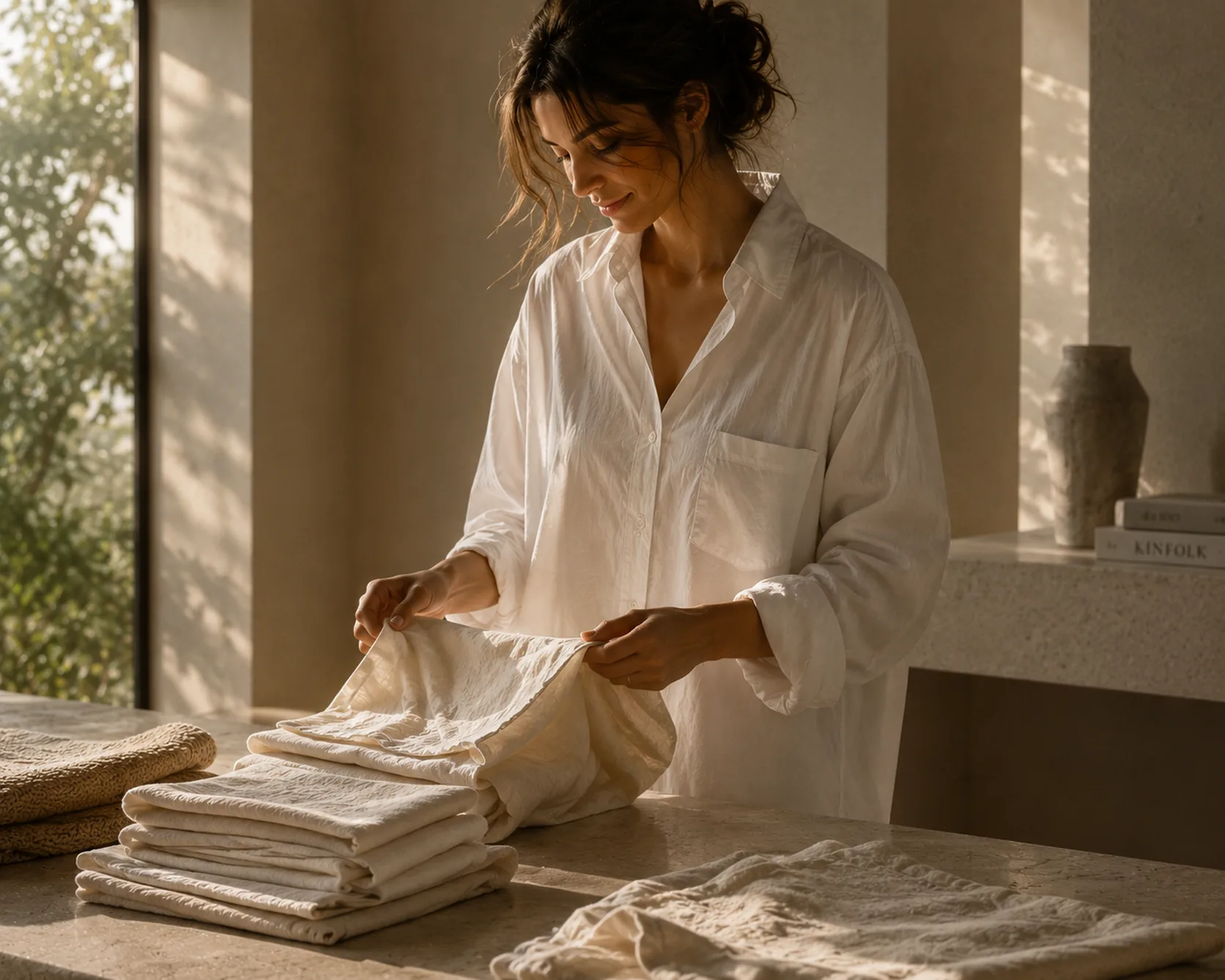
The care of linen is slowly leaving the territory of "household cleaning" and entering that of lifestyle.
Toward a new generation of laundry
The future of laundry care will likely be quieter.
Less voluminous.
Less artificial.
Less dependent on plastic and excess.
It will become more concentrated.
More sensorial.
More aligned with lives that now seek simplicity over accumulation.
The care of linen may stop being a mere domestic gesture.
It may become a natural extension of interior design, of well-being, and of the relationship we cultivate with the everyday objects around us.
Why continue to ship litres of water when technology, design and our way of living allow us to imagine something else?
Why accept that everyday products are still designed as disposable, when our expectations have so profoundly evolved?
Laundry care may be entering a new era.
An era where performance alone is no longer enough.
An era that also asks for:
- coherence
- beauty
- simplicity
- respect for materials
- a form of silent elegance
Perhaps laundry does not need to be reinvented.
Perhaps it simply needs to be elevated.
Sources & References
Unsustainable Magazine — Environmental Impacts of Laundry.
unsustainablemagazine.com
National Geographic — Plastic Pollution Resource Library.
education.nationalgeographic.org